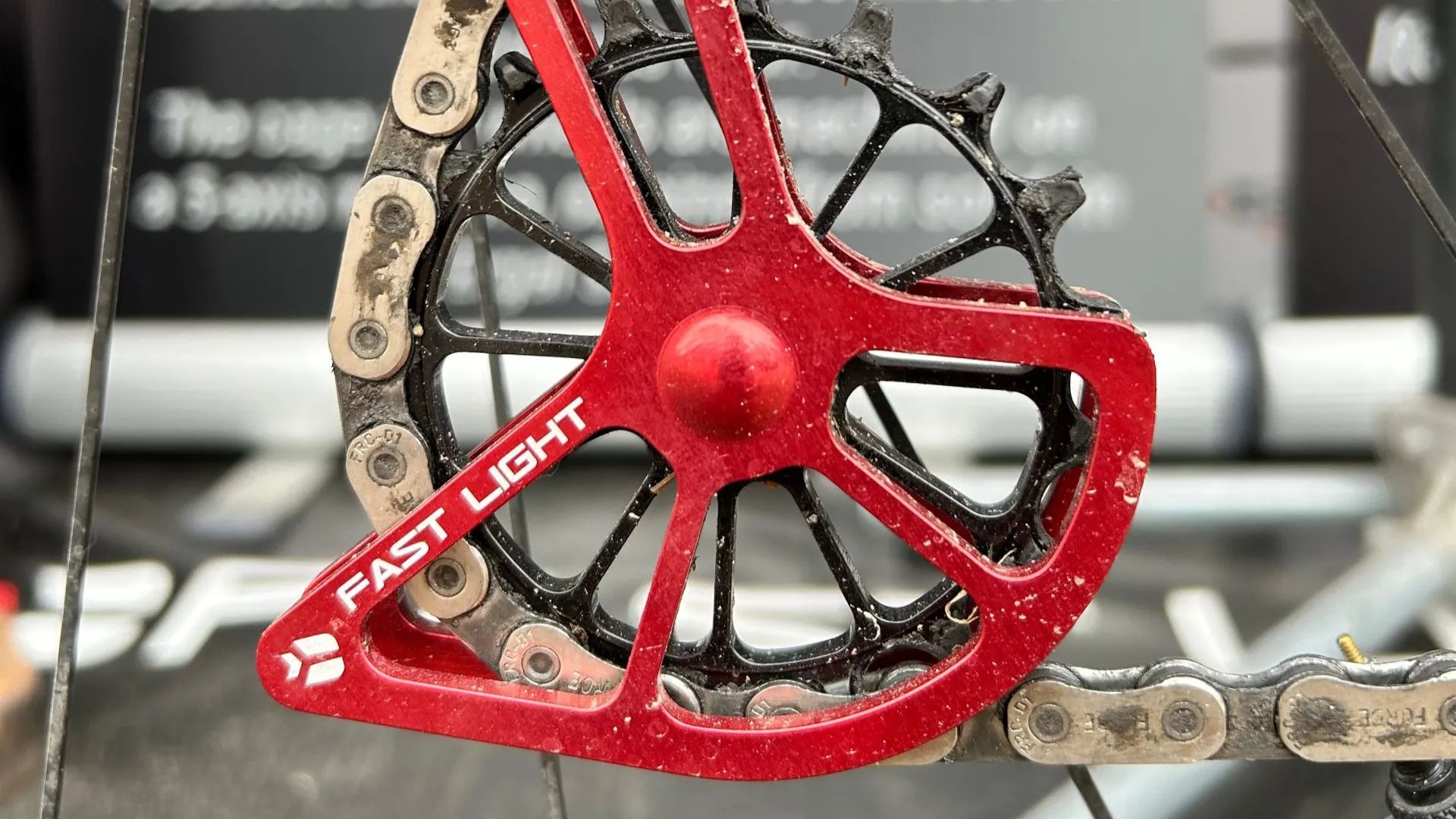
Derailleur cages, also known as “derailleur arms” or “cages,” are key components in the drivetrain systems of racing bicycles. Their function is to guide the chain between the different sprockets of the rear cassette (rear derailleur) or between the crowns of the crankset (front derailleur), thus enabling gear changes. Also, in the rear derailleur, the cage helps maintain chain tension. This is essential to ensure smooth gear changes and to prevent the chain from loosening or falling off. Cages can be made of plastic, metal, or composite materials. The plastic ones are lightweight and inexpensive, while the metal versions are more durable; you must, in any case, make sure they are compatible with the bike’s pedals.
Types of Derailleur Cages
There are different types of derailleur cages:
Short Cage (Short Cage): Designed for cassettes with a limited gear range. Commonly used in racing bicycles that need less chain handling capacity.
Medium Cage (Medium Cage): Provides greater capacity than the short cage and can handle cassettes with a wider range of gears.
Long Cage (Long Cage): Suitable for cassettes with wide gear ranges. It is commonly used in racing and gravel bikes with single front chainring configurations, which require more chain handling capacity.
The choice of cage length depends on the number of front crowns and the size of the rear cassette. A derailleur with a longer cage is needed for cassettes with a wider gear range, as it can handle a greater difference between larger and smaller sprockets.